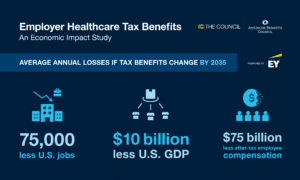
EY study finds limiting employer health tax exclusions could reduce jobs, lower compensation, raise uninsured rates, and slow U.S. GDP growth.
This EY economic impact study analyzes a proposal to limit the tax exclusion for employer-sponsored health coverage to the 75th percentile of premiums beginning in 2026. The report estimates that the policy would reduce the tax advantage of employer health benefits, leading some employers and employees to choose lower-cost coverage or drop coverage altogether. EY projects an average loss of 75,000 jobs annually over the first decade, lower employee compensation, reduced GDP, and higher uninsured rates. By 2035, an estimated 2.8 million fewer people would have employer-sponsored insurance, with about 1.5 million becoming uninsured.