
FOR IMMEDIATE RELEASE
Commercial P&C Pricing Increases Continue Easing in First Quarter of 2014, According to CIAB Survey
WASHINGTON, D.C. – Price increases for commercial property and casualty premiums continued to ease in the first quarter of the new year, according to The Council of Insurance Agents & Brokers’ quarterly Commercial P&C Market Index Survey.
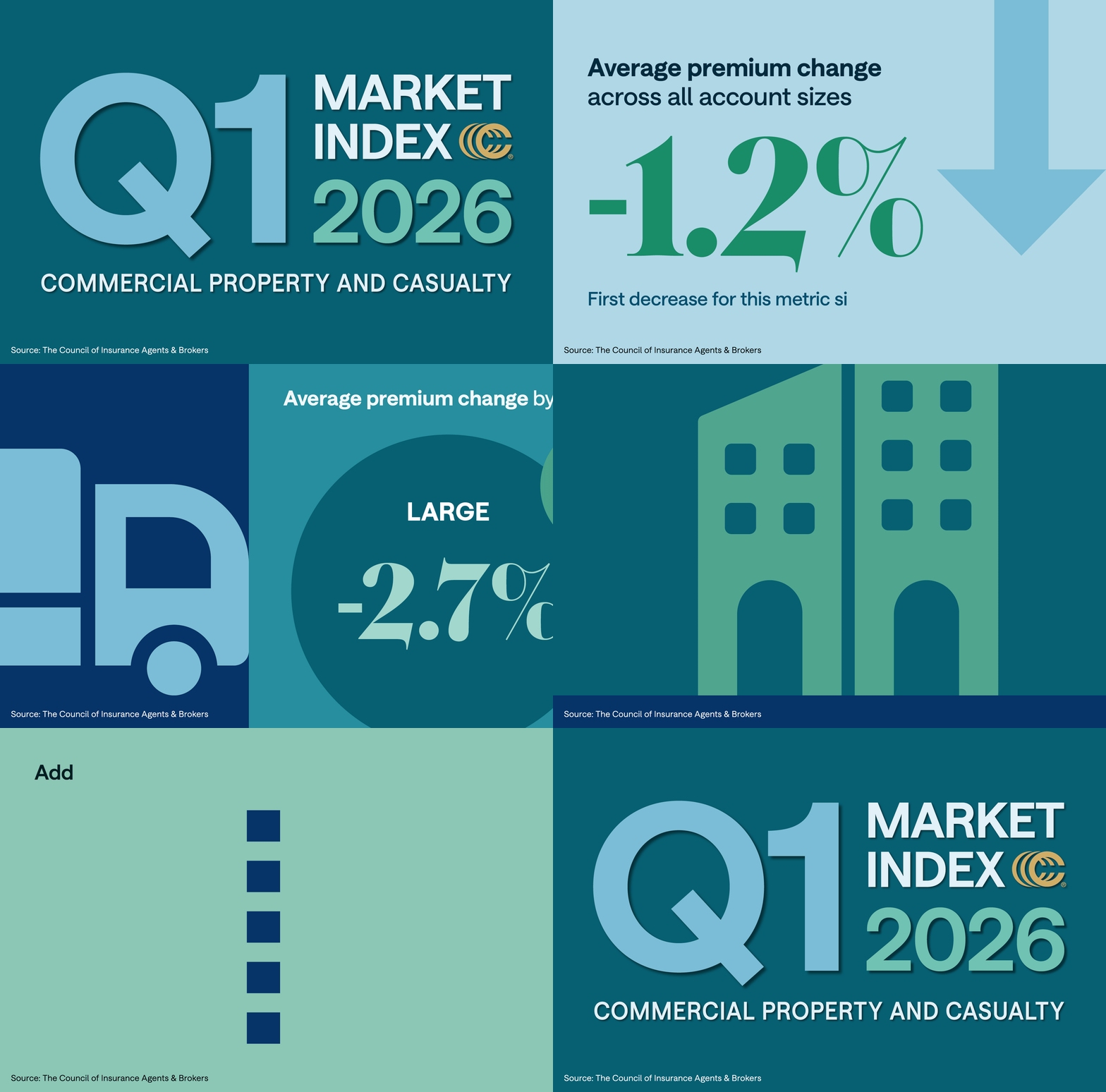
On average, pricing for large, medium and small accounts rose at a rate of 1.5 percent compared with 2.1 percent in the last quarter of 2013, as shown in the charts prepared by Barclays Research based on The Council’s data.
“Last year was good to the carriers, which the survey numbers reflect,” said Ken A. Crerar, president/CEO of The Council. “Catastrophe losses were low, profitability rebounded as a result of higher premiums, and the economy greatly improved. All of that, coupled with ample capacity and more competition in the reinsurance market, no doubt had a dampening effect on price increases,” said Crerar.
The exception to the first quarter good news for commercial buyers was workers’ compensation, which continued to be a tough line to write coast to coast. In southern California, brokers reported tighter underwriting, while some carriers added territorial factors. One Northeast broker noted that workers’ compensation capacity “continued to shrink.
The Pacific Northeast saw a spike in flood insurance prices, where the recent mudslide disaster in Washington State underscores the risk in the area. Price increases and issues with employment practices liability insurance (EPLI) and umbrella coverage varied by region. In the Southwest, EPLI retentions went up and terms tightened. In New York, umbrella prices “significantly” increased with lower limits for contractors.
Overall, prices were stable or declined in most lines in the first quarter. New business remained competitive and terms and conditions didn’t change appreciably. However, some brokers said carriers were still scrutinizing risks with losses and looking for rate increases if they wrote the business at all. Still capacity appeared to be abundant, with some noted exceptions.
When asked what the impact would be on terrorism coverage if Congress failed to reauthorize the Terrorism Risk Insurance Act before its December 31 expiration, most of those responding said capacity for terrorism risks would be limited. “Appears coverage, at this point, will go away if Congress does not subsidize,” a broker from the Southwest commented. A Northeast broker said that “On most commercial accounts, terrorism coverage for property would be eliminated.” Another broker was concerned about availability for risks in Washington, D.C., while a few others either said they didn’t know or thought there wouldn’t be much impact.
Attracting and keeping talent continues to be the top priority for brokers. Capacity issues and uncertainty in health care also keep them on their toes. They predict the M&A trend for wholesale brokers will continue and the number of independent agencies will decline as firms consolidate. A number of brokers are optimistically cautious about the economic rebound. On the political front, the brokers see the lack of leadership in the political system as an ongoing problem for the country.
The Council’s survey is the oldest source of commercial property-casualty market conditions, pricing practices and trends, dating back to 1999.
P&C Market Survey Contact:
Zach West
Senior Content Specialist/Copy Chief, Leader’s Edge